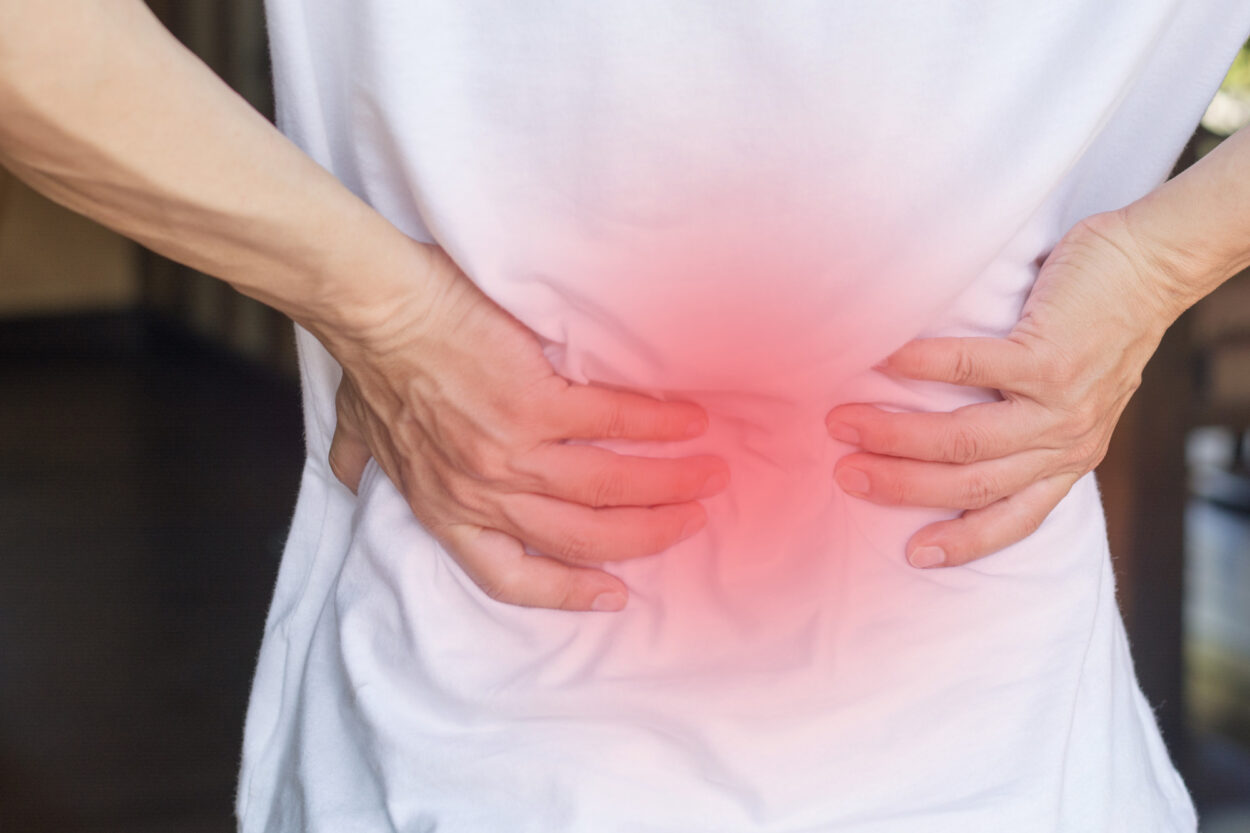
Most joint problems typically don’t start at the knee or the hip in question. Instead, they start at the floor – more precisely, with what you’re wearing when you stride your way across it. The footwear choices you make during casual hours, weekends, errands, and vacations often set you up to do more long-term wear and tear than anything physically happening at the gym.
Contents
The kinetic chain doesn’t take days off
Imagine your skeleton as a connected series. Say the foot rolls inwards because there’s no medial arch support to cradle its natural lift. In that case, the tibia also rolls inwards and this causes internal rotation. That rotation is transferred right up to the knee joint, where the medial compartment is seriously overloaded. Over time, this accelerates cartilage wear and tear on one side of the joint, while everything is hunky-dory on the other. The upshot? Asymmetric knee degeneration that your doctor struggles to justify because “you never injured your knee.”
It’s the same story at the hip. Tibial rotation throws it out of alignment and this screws up the loading on your lumbar vertebrae. People with chronic lower back pain often present no obvious spinal pathology. But because it all happens so gradually, so casually, nobody ever bothers connecting the two.
What flat footwear actually does to soft tissue
Wearing flat, thin-soled shoes is not a good option since the Achilles tendon is forced into a lengthened and under-loaded position with every step. This may seem harmless but the issue is that tendons respond to repeated loading positions. When spending long hours in flat shoes, the posterior chain will become accustomed to working in an elongated state. If you suddenly shift to heel-elevated shoes, or engage in running or climbing stairs, the tissue will be strained as it is no longer accustomed to that range of motion.
It’s common to see Achilles tendonitis in people who switch between flat casual shoes and more active footwear, without any consistent structure in between.
The second issue is metatarsalgia, where a lack of shock absorption in the forefoot means that with every step, force is concentrated directly into the metatarsal heads. Post-inflammation, this is exquisitely painful and slow to resolve, in part because the loading continues.
Here’s a mechanical problem most people don’t think about: traditional loose flip-flops don’t secure the foot. To stop them from flying off with each step, the toes grip downward, contracting the flexor tendons repeatedly throughout the gait cycle. That gripping action is abnormal muscle recruitment. Over time, it contributes to hammer toe formation, plantar fascia irritation, and tendon fatigue in the smaller intrinsic muscles of the foot.
The evolution of ergonomic casual footwear
The solution to this problem isn’t to throw out casual footwear – it’s to expect more from their design. A type of ergonomic sandal, for instance, has emerged that’s been designed to counter the biomechanical flaws in its flat forebears, and the best of them are indistinguishable from a “normal” pair.
Supportive thongs with contoured footbeds have become more common as an alternative to traditional flat designs. These typically feature a raised arch through the footbed, sometimes around 2 to 3cm, which is a significant departure from completely flat construction. Many also use different strap systems designed to hold the foot more securely rather than relying on toe grip alone. Some brands, like archies thongs, fall into this category. The result is something that functions more like a supportive sandal than a typical beach thong, though it still looks like one from the outside.
One of the key ways casual footwear that functions diverges from casual footwear that simply may feel good is via foam density. Too-soft foam collapses beneath your body’s weight and provides no support. Too-firm foam in the likes of sandals transmits the forces of heel strike straight up into your joint. The right amount of foam absorbs the impact of your step while maintaining just enough rigidity to ensure your arch doesn’t collapse under load.
A simple checklist for casual shoes worth wearing
When it comes to casual footwear – like sandals, slip-ons, or summer shoes – here are four requirements that will help you avoid later expenses and discomfort, and protect your joints in the process:
- A footbed that fits the contour of your arches, rather than being completely flat
- Heel coverage to ensure stability and prevent toe-clenching compensation
- Midsole foam with a moderate, consistent density that doesn’t collapse with every step
- Sufficient longitudinal arch support to prevent your arch from overpronating
None of these qualities necessarily make a shoe look like an orthopedic shoe. No one likes the look of “sensible” shoes, and you really don’t have to compromise anymore. Modern ergonomic design and manufacturing makes sure of that. The joints you’re protecting now are the ones you’re counting on for independence in twenty years. And casual time adds up a lot faster than athletic time.