Imagine someone at the hospital or on the phone says you were 20% to blame for your car wreck, so your $50,000 case is now only worth $40,000 and you haven’t even met with an attorney yet. That’s comparative negligence in operation, and it determines liability and damages in practically every automobile crash claim in the U.S. Knowing how those percentages are determined and contesting a wrong one can make or break your case.
Contents
What Comparative Negligence Actually Means
Comparative negligence means fault is shared among drivers rather than assigning the entire responsibility to one individual. For example, if you are determined to be 30% at fault for an accident, your compensation will be reduced by 30%. This seems reasonable, but until you see what the alternative offered in most states, it’s practically a slap on the wrist.
For the most part, those other states are still using contributory negligence. It is the ancient rule that is still in effect in Alabama, Maryland, Virginia, and Washington D.C. If contributory negligence applies to your case, and you are found guilty of even a sliver of the blame (1%), you lose the case, racking up a bill for 100% of your losses. It wouldn’t matter if the other party had broken every traffic law in the book, while they were on their phone running a red light. If it’s determined that you were driving under the speed limit when they hit you, that is negligence, and you aren’t getting a dime. This archaic rule bankrupted a sufficient amount of victims to be rightfully ditched in every other state a long time ago. Fearing the wrath of their constituents, state politicians were forced to implement the sensible-reasonable decision that protecting innocent victims from going bankrupt is not optional.
Pure Versus Modified Comparative Negligence
Not all comparative negligence rules are created equal, and the difference can determine the entire result of your lawsuit.
Pure comparative negligence allows you to get compensation regardless of how much blame you are assigned. California, New York, and Florida follow this approach. Even if you are 99% to blame, you’re entitled to recover 1% of your damages from the other party. It’s lenient, and very few people are prevented from recovering anything.
Modified comparative negligence is the standard approach, and it includes a cut-off point. Once your level of fault surpasses a certain percentage, your recovery is reduced to zero. Some states have set the threshold at 50%, which means you are barred from recovery as soon as you are equally responsible or more so than the other party. Other states (including Texas) have set the threshold at 51% based on the proportionate responsibility law (Texas Civil Practice & Remedies Code Section 33.001). When you exceed that threshold, you leave empty-handed, regardless of the amount of your damages.
That one percentage point difference between a 50% cut off and a 51% cut off is very important. At 50%, your claim is dead once you are deemed equally responsible. At 51%, you can still recover half your damages when you are equally responsible. The adjusters for the insurance companies are all over this. Most victims are not, and that lack of information is exploited every day.
Common Crash Patterns and Who Usually Takes the Blame
Some kinds of accidents come with preassigned fault. Knowing this can be helpful because you can use this information before you even get to negotiation. Resources like Texas Crash Network exist specifically to help drivers understand where they stand under their state’s fault rules before they agree to anything an adjuster puts in front of them.
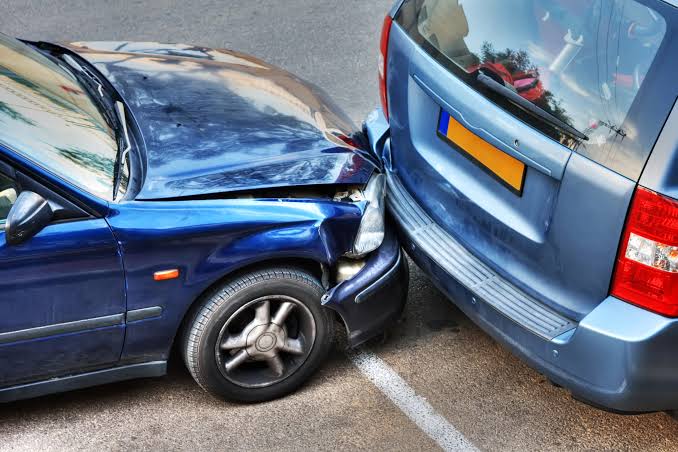
Rear-end collisions are the perfect example. The tailing motorist is largely assumed to be at fault. It is assumed that they were either following too closely, or failed to respond in time, thus causing the crash. Rear-end collisions are the most common type of car crash in the U.S. accounting for 32% of all accidents (NHTSA). Therefore, this is one of the most typical fault disagreements out there. But the assumption is not all-encompassing, a driver who stops unexpectedly, or a driver whose brake lights are out, can carry a portion of blame for the crash.
When a left-turn motorist and a straight motorist collide, the left-turn driver racks up most of the blame. The most basic rule of the road is that the party going straight through an intersection has the right of way. Exceptions to this rule occur when the straight-driving motorist is speeding or ran a yellow light.
Multi-car pileups are the most complex form of accident. The blame is divided among three, four, or more drivers, and it often takes a dashcam video or a reconstruction expert to determine what occurred first: who hit who, and when, and how did the originating collision happen. In these types of accidents, the percentage of blame assigned to you can fluctuate a lot based on what was seen, and not seen, first.
The Math Behind a Reduced Settlement
Let’s use an example to illustrate this concept further. If your total damages, including medical bills, lost wages, and pain and suffering, amount to $100,000, and it is determined by an adjuster or a jury that you are 30% at fault for the accident, your compensation will not be $100,000, but rather $70,000.
Now let’s go a step further. If you are determined to be 45% at fault, you will still receive $55,000 in a 51% bar state such as Texas. However, if you are found to be 52% at fault, you will not receive any compensation. Those seven percentage points between 45% and 52% are equivalent to $55,000. This shows why insurance firms litigate fault percentages that appear to be minor technical disputes on paper. A few percentage points in one direction or the other can mean the difference of tens of thousands of dollars, if not the entire case.
How Fault Percentages Actually Get Assigned
No one gives you a responsibility percentage to take home at the scene. It is determined step by step, and the construction is much messier, and more open to discussion, than expected by most.
Police accounts are important, but they are not carved in stone. An officer’s account, based on declarations and physical proof at the site, frequently is used by the insurance provider to assess the situation. Eyewitness reports help in completing the blanks, primarily when there are discrepancies regarding the right of way or the velocity of the vehicles. Violations of traffic laws are significant: running a signal, not signaling, or breaking the right-of-way lead the scale of blame to lean more on the violator.
The insurance adjuster compiles all of this and develops an unofficial percentage division that is the base of their proposed agreement. This division is not a legal decision. It is an initial stance, and the incidents’ report version that is most advantageous for the financial situation of the insurer frequently shapes it. Adjusters are aiming to find ways to charge you with a greater fault percentage, as every additional point results in savings for their business.
Three Mistakes That Inflate Your Fault Percentage
What you do in the minutes and days after a crash can add fault percentage points you’ll never claw back later.
First, don’t say “I’m sorry” or “I didn’t see you” at the scene. These phrases get treated as admissions of fault, even when you’re just being polite or in shock. Police officers and other drivers remember exactly what you said, and it shows up in reports.
Second, don’t give a recorded statement to the other driver’s insurance company. Adjusters are skilled at asking questions designed to get you to say something that sounds like an admission, even when you’re just accurately describing events. You’re not required to give them a statement, and you shouldn’t without talking to someone representing your interests first.
Third, don’t delay medical care. Gaps between the accident and your first doctor visit get used to argue that your injuries weren’t serious, or worse, that something else caused them. Insurers love a documentation gap, it hands them an argument for free.
Why Texas Drivers Need to Know the Local Rules
Texas uses the 51% bar rule, and therefore, the difference between gaining recovery and getting nothing can often simply be one percentage point. Texas harbors one of the highest uninsured driver rates in the country, so uninsured/underinsured motorist coverage should be an important decision for those regularly driving in the state. Then, Texas gives you two years from the date of the accident to file a lawsuit under the statute of limitations for injury claims, and the clock is continually ticking, no matter how close you get to that two-year mark.
These rules also reinforce each other in ways that are just maddening if you’re not familiar with that legal landscape. A driver who’s perhaps a little too confident they’re “fine” at 40% fault might be converted to 52% once the insurer decides to factor in a disputed traffic violation. Voila, the driver is over the 51% threshold, and the entire claim is now void. For this reason, the hustle is real. The best way to protect yourself is to access state-specific guidance early, before an adjuster also counts that traffic violation for their side.
Comparative Negligence and the Settlement Negotiation
The percentage of fault an insurance company offers you initially is not the final number. It’s a gambit, and it’s designed to weigh in the check writer’s favor. Adjusters regularly lead with a higher fault percentage than the facts warrant, counting on victims not to challenge it. Challenging it works. If you can present a witness statement, dashcam video, or an accident reconstruction report that directly refutes their account, the percentage changes.
Settlement talks concerning comparative negligence are actually about which version the evidence backs up, and the more evidence you have, the more likely you are to win the percentage dispute. DUI and distracted driving is where this greatly skews: a driver cited for DUI or known to be on the phone almost always gets stuck with a bigger piece of the pie, because statutory negligence has long been assumed by courts and insurers to be equivalent to comparative negligence.
Evidence That Protects Your Percentage
Gather this before it’s too late and impossible to prove what really happened:
Photos of the accident and injuries as close to the event as possible. Witnesses’ names and contact information. Your dashcam video, if you have one. Security camera footage from any nearby businesses that may have captured the accident. Medical records that directly connect the accident to your injuries and show no gaping holes in treatment dates.
None of this can save you from someone else’s mistakes, but every piece of evidence will make it harder for others to shift blame onto you.
The percentage attached to your name after a crash isn’t handed down from on high. It’s argued, negotiated, and built from whatever evidence exists when the dust settles. Knowing how that number gets built, and what protects you from watching it climb, is the difference between a fair settlement and a claim that quietly disappears.